
The Atlas Aura Method
The Atlas Aura Method
The Atlas Aura Method is a structured way of seeing cities beyond tourism developed through long-term observation and real-world analysis.
The Atlas Aura Method is a structured way of seeing cities beyond tourism developed through long-term observation and real-world analysis.
Core Access
One-time payment
Price: €49 - available until September 2026
No subscriptions. No automatic renewals
This is a digital informational product.
After payment, you will receive a personal download link by email within 48 hours.
Price €49 is available until September 2026.
No outcomes, results, or specific benefits are guaranteed.
You are purchasing access to information and perspective only.
49.00€
Five operations.
Any city.
Every time.
After this, you stop following cities. You start reading them.
You've been to cities. This is why you never really saw them.
You've already seen how cities appear. This shows you what actually shapes them and why every street, every square, every accidental turn is less accidental than it looks.
Developed across 30+ cities, Rome, Budapest, London, Vienna, Trier, and others …
You saw everything.
And still missed the city.
You stood in the famous squares. You followed the routes. You left with photos. And something vague stayed behind the feeling that the city was somewhere just out of reach, and you couldn't name what you'd missed.
You've been there and still couldn't explain why it felt the way it did.
You saw what the city wanted you to see. That's not the same thing as seeing the city.
Tourist infrastructure works like a steamroller. It smooths friction, removes uncertainty. Convenient. But you arrive and meet not the city, but its pre-assembled version. Polished. Explained before you got there.
Most people never notice. This is not how cities are usually taught and that's the point.
What cities actually do.
Cities almost never start from a blank page. Even those founded from scratch quickly discover that something was already there and that something seeps into the new geometry. These are the five mechanisms through which it happens.
This is what you start seeing once the method clicks.
01 Layering
New structure appears on top of old not erasing it, simply because removal cost more than keeping. The old boundary continues living in modern asphalt. When a street turns without reason, that's an old property line. It hasn't gone anywhere.
Piazza Navona in Rome sits directly over Domitian's stadium. The oval of the stands became the boundary of new construction. People drink coffee there now. Nobody thinks about the racing track beneath their feet.
02 Cutting
Someone drives a new axis into already-formed fabric. Wider, straighter, visibly out of proportion with what stands around it. These lines are almost always tied to a political decision not the growth of a city, but someone's desire to remake it under a different idea.
Andrássy Avenue driven into the fabric of Pest. Walk three blocks off it facades close into a continuous line, courtyards retreat deep, space compresses. Same era. Different logic.
03 Densification
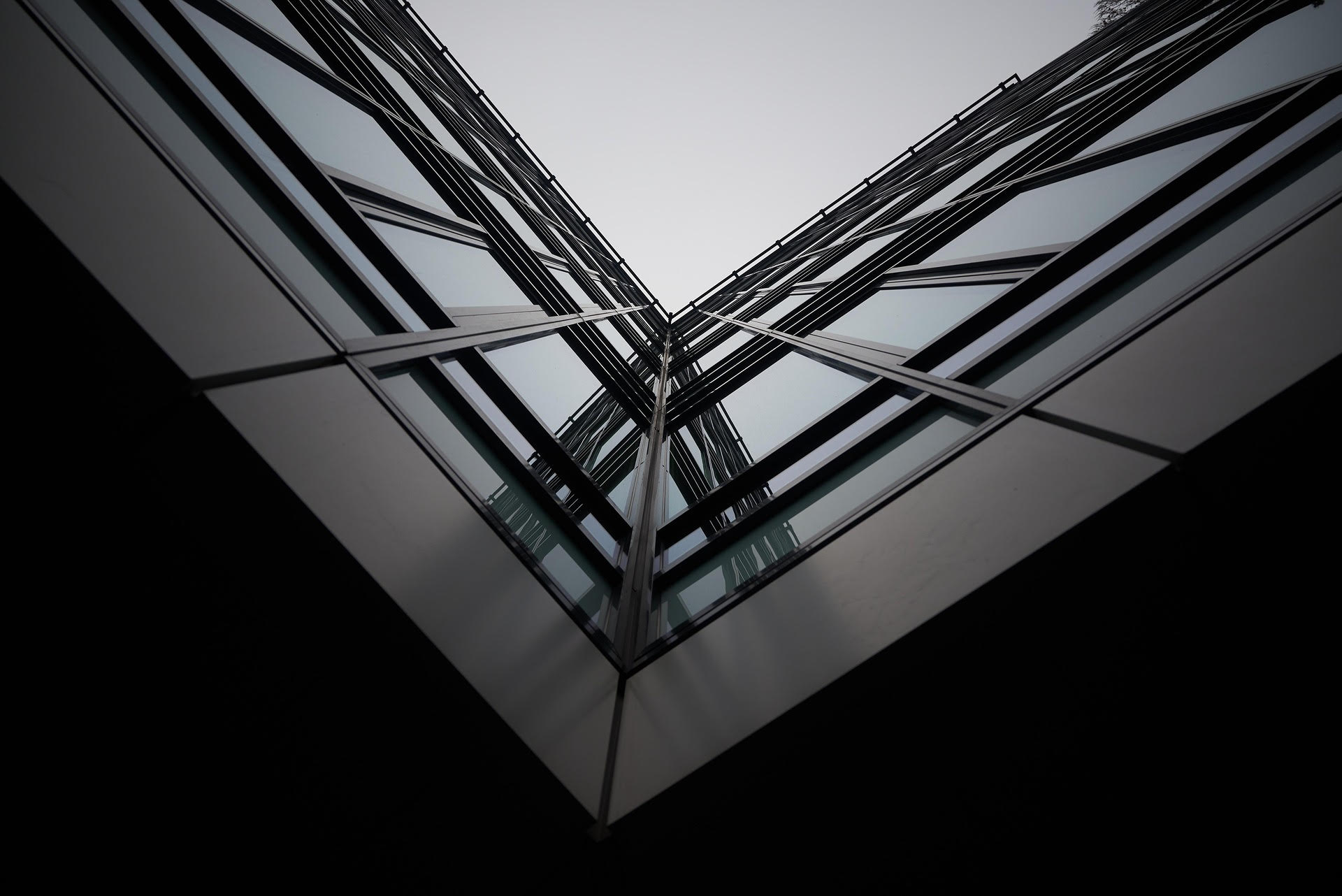
It happens imperceptibly. One floor at a time, one wing at a time. A century later, a block that once breathed becomes enclosed. The sky above your head shrinks. This isn't a decision it's pressure. The cumulative effect of a thousand separate ones.
Old courtyards that once let light through are now completely boxed in. Each addition individually rational, collectively transforming something nobody decided to transform.
04 Rupture
When something disappears. Fire, war, sanitary reform. The place doesn't grow over it leaves either emptiness disguised as a park, or scale that matches nothing around it. A street too wide for its neighborhood always asks one question: what was here?
Old Moscow is full of such places where churches and monasteries stood, entire quarters. They didn't grow over. The absence is still legible in the geometry around it.
05 Adaptive Reuse
A warehouse becomes a gallery. A monastery becomes a university. A fortress wall becomes a boulevard. The material shell remains, the script changes. The body perceives one thing: the height of a warehouse nave, the thickness of a fortress wall. The function proposes another. This mismatch is rarely accidental.
The style of a building tells you when it was built. These operations explain why the structure around it changed at all. Architecture as symptom, not cause.
What you'll be able to do
The complete Atlas Aura Method doesn't tell you where to go. It changes what you see when you get there in any city, including ones you've already visited. After working through it, an unfamiliar street stops being chaotic. You start reading rather than looking.
And once you see it you can't unsee it.
This is not theory. This is what changes in practice:
Walk into any city and immediately ask the right questions
See why a city feels the way it does not just that it does
Apply the method within 20 minutes of arriving anywhere
Make the habit automatic not something you have to remember to do
Five operations.
Any city.
Every time.
After this, you stop following cities. You start reading them.
You've been to cities. This is why you never really saw them.
You've already seen how cities appear. This shows you what actually shapes them and why every street, every square, every accidental turn is less accidental than it looks.
Developed across 30+ cities, Rome, Budapest, London, Vienna, Trier, and others …
You saw everything.
And still missed the city.
You stood in the famous squares. You followed the routes. You left with photos. And something vague stayed behind the feeling that the city was somewhere just out of reach, and you couldn't name what you'd missed.
You've been there and still couldn't explain why it felt the way it did.
You saw what the city wanted you to see. That's not the same thing as seeing the city.
Tourist infrastructure works like a steamroller. It smooths friction, removes uncertainty. Convenient. But you arrive and meet not the city, but its pre-assembled version. Polished. Explained before you got there.
Most people never notice. This is not how cities are usually taught and that's the point.
What cities actually do.
Cities almost never start from a blank page. Even those founded from scratch quickly discover that something was already there and that something seeps into the new geometry. These are the five mechanisms through which it happens.
This is what you start seeing once the method clicks.
01 Layering
New structure appears on top of old not erasing it, simply because removal cost more than keeping. The old boundary continues living in modern asphalt. When a street turns without reason, that's an old property line. It hasn't gone anywhere.
Piazza Navona in Rome sits directly over Domitian's stadium. The oval of the stands became the boundary of new construction. People drink coffee there now. Nobody thinks about the racing track beneath their feet.
02 Cutting
Someone drives a new axis into already-formed fabric. Wider, straighter, visibly out of proportion with what stands around it. These lines are almost always tied to a political decision not the growth of a city, but someone's desire to remake it under a different idea.
Andrássy Avenue driven into the fabric of Pest. Walk three blocks off it facades close into a continuous line, courtyards retreat deep, space compresses. Same era. Different logic.
03 Densification
It happens imperceptibly. One floor at a time, one wing at a time. A century later, a block that once breathed becomes enclosed. The sky above your head shrinks. This isn't a decision it's pressure. The cumulative effect of a thousand separate ones.
Old courtyards that once let light through are now completely boxed in. Each addition individually rational, collectively transforming something nobody decided to transform.
04 Rupture
When something disappears. Fire, war, sanitary reform. The place doesn't grow over it leaves either emptiness disguised as a park, or scale that matches nothing around it. A street too wide for its neighborhood always asks one question: what was here?
Old Moscow is full of such places where churches and monasteries stood, entire quarters. They didn't grow over. The absence is still legible in the geometry around it.
05 Adaptive Reuse
A warehouse becomes a gallery. A monastery becomes a university. A fortress wall becomes a boulevard. The material shell remains, the script changes. The body perceives one thing: the height of a warehouse nave, the thickness of a fortress wall. The function proposes another. This mismatch is rarely accidental.
The style of a building tells you when it was built. These operations explain why the structure around it changed at all. Architecture as symptom, not cause.
What you'll be able to do
The complete Atlas Aura Method doesn't tell you where to go. It changes what you see when you get there in any city, including ones you've already visited. After working through it, an unfamiliar street stops being chaotic. You start reading rather than looking.
And once you see it you can't unsee it.
This is not theory. This is what changes in practice:
Walk into any city and immediately ask the right questions
See why a city feels the way it does not just that it does
Apply the method within 20 minutes of arriving anywhere
Make the habit automatic not something you have to remember to do
Core Access
One-time payment
Price €49 is available until September 2026.
No subscriptions. No automatic renewals
This is a digital informational product.
After payment, you will receive a personal download link by email within 48 hours.
No outcomes, results, or specific benefits are guaranteed.
You are purchasing access to information and perspective only.
The Atlas Aura Method
The Atlas Aura Method
The Atlas Aura Method
The Atlas Aura Method
49.00€
49.00€
49.00€
49.00€